6 Best Ozark Trail Baitcasting Reels for Beginners (2026)
Looking for an ozark trail baitcasting reel? We compare six beginner-friendly options on drag, gear ratio, braking and build so you can pick the right one.
 By Owen Palmer
Updated November 20, 2026
 By Owen Palmer
Updated November 2026
Shopping for an ozark trail baitcasting reel usually comes down to a few practical questions: how smooth is the drag, how well does the brake control backlash, and does the reel suit the line weight you plan to fish? This list weighs those factors using product listings, brand reputation and common owner feedback patterns. Each pick is a baitcaster that beginners and budget-minded anglers tend to ask about. Pricing is not part of the ranking.
Our top picks at a glance
- 1TOP CHOICEBest overallPiscifun Alinox 300 Baitcaster Fishing ReelView on Amazon
- 2
 TOP CHOICEBest for light freshwater bassKastKing Spartacus II Baitcasting ReelsView on Amazon
- 3
 TOP CHOICEBest for high-speed retrievesBaitcaster Reels 6.4:1 High-Speed Gear RatioView on Amazon
- 4
 Best for heavier drag needsKastKing Lethal Phantom Baitcasting Fishing ReelView on Amazon
- 5
 Best for beginners who want anti-backlash helpSOUGA DC Baitcaster ReelView on Amazon
- 6
 Best for saltwater-adjacent usePiscifun Alinox 300 Baitcasting Reel, GrayView on Amazon
Our Top Picks
Quick Comparison
| Product | Best for | Key feature |
|---|---|---|
| Piscifun Alinox 300 Baitcaster Fishing Reel | All-around use | 33 lb max drag |
| KastKing Spartacus II Baitcasting Reels | Light freshwater bass | Ultralight, 7+1 bearings |
| Baitcaster Reels 6.4:1 High-Speed | High-speed retrieves | 6.4:1 gear ratio |
| KastKing Lethal Phantom Baitcasting Fishing Reel | Heavier drag needs | 15.5 lb drag, 11-setting magnetic brake |
| SOUGA DC Baitcaster Reel | Beginners | Digital anti-backlash control |
| Piscifun Alinox 300 Baitcasting Reel, Gray | Saltwater-adjacent use | Aluminum frame, 33 lb drag |
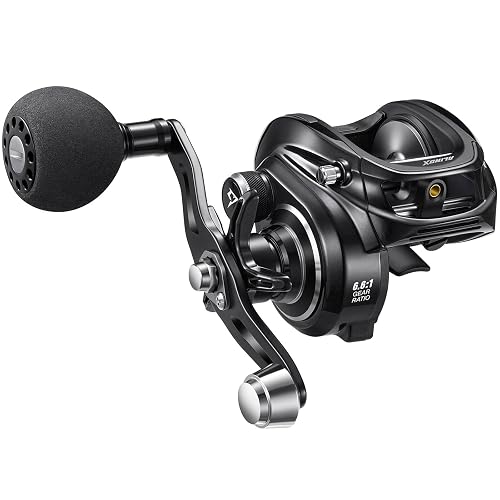
Piscifun Alinox 300 Baitcaster Fishing Reel
PiscifunFreshwater saltwater, 6.6/8.1 ratios, smooth casting, low-profile body Alinox 300 Baitcasting Reel, 33LB Drag, Aluminum Frame
Best for: All-around freshwater and light saltwater use
This aluminum-frame reel suits anglers who want one reel for bass, musky and similar species. The listed 33 lb max drag and 8.1:1 gear ratio give it room to grow into bigger fish.
Pros
- Strong listed drag for its size
- Fast 8.1:1 gear ratio for quick retrieves
Cons
- Heavier than ultralight options
KastKing Spartacus II Baitcasting Reels
Max Drag: 17.6 lb, 7+1 BB, 6 oz, Graphite Frame, 5-Button Magnetic Brake, Ultralight and Super Smooth KastKing Spartacus II Baitcasting Fishing Reels with 7.2:1 Gear Ratio
Best for: Light freshwater bass
Owners often report that this lightweight graphite-frame reel feels comfortable on long days of casting small lures. It suits anglers working smaller baits on light line.
Pros
- Light at about 6 oz
- Five-button magnetic brake for backlash control
Cons
- Lower max drag than the heavier models
Baitcaster Reels 6.4:1 High-Speed Gear Ratio
Baitcaster Reels 6.4:1 High-Speed Gear Ratio 33LB Max Drag 8+1 Bearings | Fishing Reel Aviation-Aluminium Spool Aluminum star-shaped trailer and handle arm Magnetic Brake System
Best for: High-speed retrieves
This model fits anglers who fish spinnerbaits and crankbaits and want to pick up line quickly. The 33 lb listed drag and eight bearings are the main specs to check.
Pros
- Quick 6.4:1 gear ratio
- Magnetic brake system included
Cons
- Lower gear ratio means slower power-fishing pulls
KastKing Lethal Phantom Baitcasting Fishing Reel
KastKing Lethal Phantom Baitcasting Fishing Reels, 7.3:1 Gear Ratio, Right | Max Drag: 15.5 lb, 5+1 BB, 6.9 oz, Superpolymer Reel Handle, 11-Setting Magnetic, Ultra-Smooth Freshwater & Inshore Fishing
Best for: Heavier drag needs
Anglers targeting bigger freshwater or inshore fish may appreciate the listed 15.5 lb drag and the adjustable 11-setting magnetic brake.
Pros
- Adjustable 11-setting magnetic brake
- Smooth superpolymer handle
Cons
- Drag rating sits below the top options here
SOUGA DC Baitcaster Reel
SOUGA DC Baitcaster Reel, Smart Digital Anti Backlash Baitcasting Reel, 7.5:1 High Speed, 8+1 Bearings, 18LB Max Drag, CNC Aluminum Spool, Line Out Alarm, Low Profile Fishing Reel for Bass & Beginners
Best for: Beginners who want anti-backlash help
This digital-control reel is aimed at newer casters who struggle with overruns. The listed line-out alarm and 7.5:1 gear ratio make it easy to read what the reel is doing.
Pros
- Digital anti-backlash control
- Line-out alarm
Cons
- Electronics add a layer to learn
Piscifun Alinox 300 Baitcasting Reel, Gray
Freshwater saltwater, 6.6/8.1 ratios, smooth casting, low-profile body Piscifun Alinox 300 Baitcasting Reel, 33LB Drag, Aluminum Frame
Best for: Saltwater-adjacent use
This right-hand gray version shares the aluminum frame and 33 lb drag of the Alinox 300 line, making it a fit for brackish and light saltwater trips.
Pros
- Aluminum frame resists flex
- Low-profile body sits well in the palm
Cons
- Saltwater use still calls for rinsing after every trip
Buying Guide
Drag Strength and Smoothness
Drag is the reel’s ability to let line out under pressure when a fish runs. A higher max drag rating generally suits heavier line and larger fish, but what matters most for beginners is how smooth the drag feels when you set it. A reel with a consistent, gradual drag helps prevent snapped line during a sudden run.
Check the drag rating against the line you plan to use. If you fish light line for panfish or small bass, a reel with a very high drag may be more than you need, though it rarely hurts to have extra capacity.
Braking System and Backlash Control
Backlash, sometimes called a bird’s nest, is the most common frustration for new baitcaster users. Magnetic brakes and digital anti-backlash systems slow the spool during the cast so the line does not overrun. Reels with adjustable magnetic settings give you room to tune the brake to your casting style and lure weight.
Expect some backlash while you learn, even with a good brake. Start with the brake set higher and lower it gradually as your thumb control improves.
Gear Ratio and Retrieve Speed
Gear ratio tells you how many times the spool turns with each full turn of the handle. Higher ratios retrieve line faster, which suits topwater lures, spinnerbaits and fast-moving presentations. Lower ratios provide more cranking power, which helps when you are working heavier lures or fishing through cover.
For a first baitcaster, a mid-range ratio is a versatile starting point because it handles a wide variety of common lures.
Frame Material, Weight and Profile
Aluminum and graphite frames differ in strength, weight and cost. A lighter reel reduces fatigue over a long day, while a sturdier frame holds up better to saltwater exposure and heavier use. Low-profile bodies sit closer to the rod and tend to feel more comfortable in the hand, which many beginners find easier to control.
Line Capacity and Intended Use
Look at the line capacity printed for the reel and match it to where you fish. Freshwater bass anglers generally need a different setup than anglers targeting larger species or working in brackish or saltwater environments. Choosing a reel that fits your target species keeps your setup balanced and your casting more predictable.
FAQ
Is a baitcasting reel hard for beginners to use?
Baitcasters take more practice than spinning reels because you control the spool with your thumb during the cast. Most beginners get comfortable after a few sessions with a lighter lure and a reel that has an effective braking system. Starting with a higher brake setting makes the early learning curve much easier.
What line weight should I use on a beginner baitcaster?
Many beginners start with a medium-weight monofilament or braided line that suits common bass lures. Check the rod’s recommended line and lure range first, then match your reel to that setup. Staying within those ranges helps reduce backlash and improves casting distance.
Do I need a digital anti-backlash reel?
Digital anti-backlash systems can make early learning easier, but they are not required for successful fishing. Traditional magnetic brakes work well once you develop good thumb control. Your budget and how much time you want to spend practicing should guide the decision.
How do I stop backlash on a baitcaster?
Backlash usually happens when the spool spins faster than the lure travels, so increasing the brake setting helps. Light thumb pressure on the spool as the lure lands also keeps line from overrunning. Matching lure weight to the rod’s rating reduces the chance of tangles.
Can a baitcaster handle saltwater fishing?
Some baitcasters are rated for freshwater and saltwater use, but salt exposure still requires thorough rinsing and maintenance. Check the manufacturer’s notes on corrosion resistance before fishing in saltwater. Rinsing and drying the reel after each trip extends its life.
How often should I maintain my baitcasting reel?
Clean the reel regularly, especially after fishing in dirty water or saltwater, and lubricate moving parts as the manufacturer recommends. Regular maintenance keeps the drag smooth and the casting consistent. Periodic checks of the braking system also help you catch wear before it affects your fishing.
Conclusion
Beginners who want a forgiving, budget-friendly option with strong braking control should look at the reels with adjustable magnetic systems or digital anti-backlash features. Anglers who plan to fish heavier lures or saltwater should prioritize higher drag ratings and sturdier aluminum frames. Matching the reel’s gear ratio and line capacity to your target species will help you choose the right option from this list.
Anglers focused on lighter freshwater fishing may prefer the lower-profile, lighter-weight models, while those wanting extra cranking power can choose a reel with a more robust build. Whichever you pick, practicing with a moderate lure weight will make the learning process smoother.
Related reading
- 5 Best Ozark Trail Wayfarer Spinning Fishing Rod and Reel Combo Picks (2026)
- Who Makes the Best Baitcasting Reel? 6 Top Picks Compared (2026)
- What Is a Baitcasting Reel Used For? A Beginner's Guide (2026)
- Vintage Baitcasting Fishing Reel: 5 Best Picks for Collectors (2026)
About Owen Palmer
Owen Palmer is part of our editorial team and reviews and edits our fishing & archery gear for beginners guides, checking product details against manufacturer specifications and owner feedback.
About the author
Owen Palmer writes reviews and buying guides for Anglers and Archery.