Shimano Corvalus Baitcasting Reel Review: Is It Worth It?
Shimano Corvalus baitcasting reel review covering the CVL300 model's specs, pros and cons, who it suits, and what to check before you buy.
 By Owen Palmer
Updated November 11, 2026
 By Owen Palmer
Updated November 2026
The Shimano Corvalus baitcasting reel is a freshwater reel aimed at anglers who want a dependable, mid-range baitcaster without stepping into premium pricing. The model under review here is the SHIMANO Fishing Corvalus 300 Round Reels Baitcasting [CVL300], listed in a multi color finish. It suits beginners and intermediate anglers who are moving from spinning gear to baitcasting, or who want a reliable everyday reel for bass, panfish and similar freshwater species. It is less suited to anglers who need saltwater corrosion resistance, very high line capacity for large fish, or the lightest possible weight for long days of casting.
SHIMANO Fishing Corvalus 300 Round Reels Baitcasting [CVL300], Multi
Product Overview
The Corvalus line sits in Shimano’s freshwater baitcasting range. The CVL300 is a round, low-profile baitcasting reel in the 300 size class, a designation Shimano uses for smaller-bodied reels intended for light to medium freshwater work. Round baitcasters of this type are built around a spool that rotates on a central axle, with a level-wind mechanism that guides line back and forth across the spool as you retrieve.
Anglers who have only used spinning reels should know what a baitcaster asks of them. Casting requires a thumb on the spool to control line release, and a poorly set brake can produce backlash, the tangled bird’s nest that ends many first-day outings. Reels like the Corvalus are generally paired with baitcasting rods that have a trigger-style or reel-seat setup designed for the spool-up orientation. Because the reel is a casting tool and not just a retrieve tool, a good part of the learning curve lies in braking and thumb control, which the reel’s adjustments are designed to ease.
Shimano markets the Corvalus as a value-oriented freshwater line. Owners generally describe it as smooth enough for everyday fishing once it is set up correctly, though as with any baitcaster, results depend heavily on how well the user tunes the brakes and spool tension.
Key Features & Specifications
The table below lists only the details that are confirmed by the product name or that Shimano specifies for this model line. Exact measurements such as gear ratio, weight and bearing count vary between Corvalus variants, so check the manufacturer’s listing before purchase.
| Feature | Detail |
|---|---|
| Brand | Shimano |
| Product line | Corvalus |
| Model code | CVL300 |
| Reel type | Round baitcasting reel |
| Size class | 300 |
| Intended use | Freshwater fishing |
| Finish | Multi (color listed as multi) |
| Hand orientation | Right-hand retrieve configuration (the left-hand version is a separate listing) |
Anglers comparing this reel with others should note that the Corvalus 300 is one of several sizes in the line. Shimano’s size numbering generally reflects spool and body scale, so a 300 will feel and handle differently from a 400. For the full comparison, see the alternatives section in the Buying Guide.
Pros & Cons
Pros
- Designed for freshwater use, which matches the most common beginner targets such as bass, crappie and sunfish.
- Comes from a major manufacturer with a broad parts and service network in the United States.
- Compact 300 size keeps the reel light enough for extended casting sessions with lighter rods.
- Round baitcasting design is a familiar, widely supported platform with many aftermarket accessories.
- Available in a configuration that suits common right-hand retrieve preferences.
Cons
- Not sealed for saltwater; anglers fishing in brackish or salt water need to rinse and maintain the reel carefully.
- Baitcasting requires practice, and a poorly set brake can cause backlash for new users.
- Line capacity suits small to medium freshwater species but may be limiting for large fish or heavy braided lines.
- Specific bearing count, gear ratio and drag rating should be verified on the listing, as they vary across variants.
Performance Analysis
Because this is a research-based review, the performance notes below draw on Shimano’s general design approach for the Corvalus range and on patterns that owners commonly report, rather than on any hands-on testing.
Owners of Corvalus reels frequently describe a smooth retrieve once the reel is broken in and properly lubricated. Smoothness in baitcasters comes largely from the bearing system and gear train, so buyers should expect the reel to perform well for its class but not match the feel of premium models with more bearings and tighter tolerances.
Casting performance is almost entirely a function of brake setup. Most baitcasters, including the Corvalus, use a combination of magnetic or centrifugal braking and a spool tension knob. Owners commonly advise starting with the spool tension fairly loose and the magnetic brake set high, then adjusting in small increments until casts travel well without overrunning. A typical beginner routine looks like this:
- Tie on a lure in the 1/4 to 3/8 ounce range, which is a forgiving starting weight.
- Set the magnetic brake to its highest setting and the spool tension to light.
- Cast slowly in an open area, gradually reducing brake strength until the lure lands with minimal overrun.
- Use your thumb to feather the spool during the cast, lightly touching it as the lure approaches the water.
Drag performance and fish-fighting strength depend on the rated drag and the line used. Owners generally recommend pairing the Corvalus with monofilament or fluorocarbon in a weight appropriate to the target species, and checking the drag rating listed by Shimano before choosing line. Heavy braided line on a small-bodied reel can strain the spool and reduce casting distance, so line selection matters.
Durability in freshwater is typically good, provided the reel is rinsed after trips and stored dry. Like most baitcasters, the reel benefits from periodic cleaning and light lubrication of gears and bearings, following the manufacturer’s maintenance guidance.
Who Should Buy This Product?
The Corvalus 300 suits several types of freshwater anglers:
- Beginners who want to learn baitcasting without buying a premium reel first.
- Bass, crappie and panfish anglers who fish primarily in lakes, ponds and rivers.
- Anglers who want a lightweight reel paired with a light or medium-light rod.
- Buyers who value a recognizable brand with easy access to replacement parts.
It is a weaker choice for anglers who fish regularly in saltwater, who target very large fish that demand heavy drag and high line capacity, or who want the smoothest possible retrieve and are willing to pay for it. Those buyers should look at higher-tier Shimano models instead.
Buying Guide
Before buying any baitcasting reel, consider four factors: the species you fish, the line weight you plan to use, the rod you will pair it with, and whether you need a right-hand or left-hand retrieve. For a deeper look at reel categories, the site’s guide Spinning or Baitcasting Reel: 6 Best Picks for Beginners (2026) explains how the two designs differ in use.
Check the line capacity and drag rating printed on the listing against your target fish. A 300 size reel is best matched to smaller freshwater species and lighter line. If you regularly fish for larger bass or want to use heavier braid, a larger size may be a better fit.
Hand orientation is an easy point to overlook. The Corvalus 300 listing specifies its configuration, and a separate left-hand version exists within the same family. Make sure the reel matches how you hold your rod, and consider whether a rod with a matching reel seat is already on hand.
If you are comparing options within the Corvalus family, two alternatives are worth knowing about:
- The SHIMANO Fishing Corvalus 400 Round Reels Baitcasting [CVL400], Multi is the larger sibling in the line, offering a bigger spool and more line capacity for heavier freshwater work.
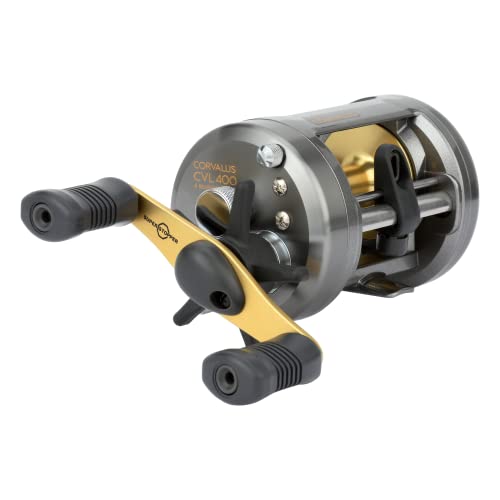
SHIMANO Fishing Corvalus 400 Round Reels Baitcasting [CVL400], Multi
- The SHIMANO Corvalus 401 Round Freshwater Fishing Reel Left Hand is the left-hand retrieve option in the family, useful for anglers who cast and retrieve with the opposite hand.
SHIMANO Corvalus 401 Round Freshwater Fishing Reel Left Hand
For buyers who want to explore a broader range of Shimano baitcasters, the article 7 Best Shimano Baitcasting Reels of 2026: Our Picks for Every Angler compares several models across price tiers, and Shimano Curado Baitcasting Reel Review: Is It Worth It? covers a related mid-range option.
Setup and first-use habits matter as much as the reel itself. Beginners who want a step-by-step introduction can follow Shimano Curado K Baitcasting Reel: A Step-by-Step Guide for Beginners for general brake and spool routines that apply across many baitcasters.
FAQ
Is the Shimano Corvalus 300 good for beginners?
It can be a reasonable choice for beginners who are willing to spend time learning brake and thumb control. Its compact size and freshwater focus suit common first-time targets. Expect some backlash during early practice sessions, which is normal for any baitcaster.
Can I use the Corvalus 300 in saltwater?
The reel is designed for freshwater use. Saltwater exposure can accelerate corrosion, so if you fish in brackish or salt water, rinse the reel with fresh water after each trip and follow the manufacturer’s maintenance guidance. Consult the manufacturer’s documentation for specific saltwater recommendations.
What line should I use with this reel?
Owners commonly pair the reel with monofilament or fluorocarbon in a weight suited to the species you fish. Check the line capacity and drag rating on the listing, and avoid very heavy braid on a small-bodied spool, which can reduce casting performance.
What is the difference between the Corvalus 300 and 400?
The 400 is a larger size in the same family, generally offering more spool capacity and suited to heavier freshwater fishing. The 300 is more compact and lighter, which many anglers prefer for smaller species and lighter rods. Compare the listed dimensions and line capacities before choosing.
Do I need a special rod for this reel?
You will want a baitcasting rod rated for the lure weight and line you plan to use. Many anglers pair the Corvalus with a light or medium-light baitcasting rod. Make sure the rod’s reel seat matches the reel’s foot.
How do I stop backlash when casting?
Set the magnetic brake high and the spool tension light when starting out, then gradually reduce braking until casts travel well. Use your thumb to feather the spool during the cast, and practice in an open area with a heavier lure to build consistency.
How should I maintain the reel?
Rinse the reel after freshwater trips, dry it thoroughly, and store it in a cool, dry place. Periodically clean the spool and apply light lubrication to gears and bearings as the manufacturer recommends. Consult a professional repair shop if you notice grinding or stiffness that cleaning does not resolve.
Is the Corvalus worth buying over a basic baitcaster?
The answer depends on your priorities. Buyers who want a recognized brand, easy parts access and a sensible freshwater design often find it a sound choice. Anglers who want the smoothest retrieve or saltwater durability may prefer a higher-tier model.
Final Verdict
The Shimano Corvalus 300 is a practical freshwater baitcasting reel for anglers who want a known brand and a compact, lightweight platform for bass, panfish and similar species. Its strengths are its freshwater focus, size and brand support. Its limitations are the usual baitcasting learning curve, limited suitability for saltwater, and a line capacity that favors smaller fish. Buyers who fit that profile should find it a sensible option. Anglers who need heavier capacity or saltwater durability should look at the Corvalus 400 or a higher-tier Shimano model.
View on AmazonRelated reading
About Owen Palmer
Owen Palmer is part of our editorial team and reviews and edits our fishing & archery gear for beginners guides, checking product details against manufacturer specifications and owner feedback.
About the author
Owen Palmer writes reviews and buying guides for Anglers and Archery.